Against the backdrop of continuous advancements in food processing, freeze dried food equipment is becoming a core focus for an increasing number of companies. Compared to traditional drying methods, freeze-drying technology can significantly enhance product quality and market value. So, what exactly is this equipment, and how does it work? This article will provide a comprehensive analysis.
What Is Freeze Dried Food Equipment?
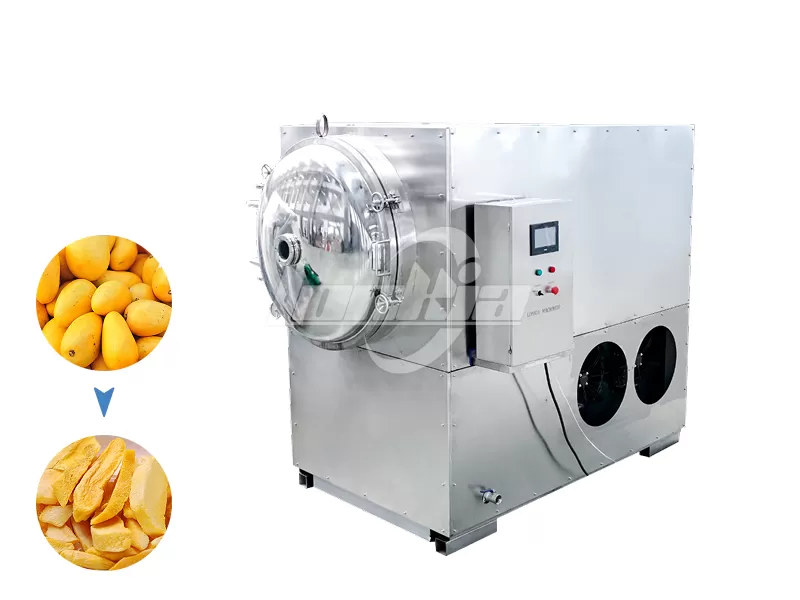
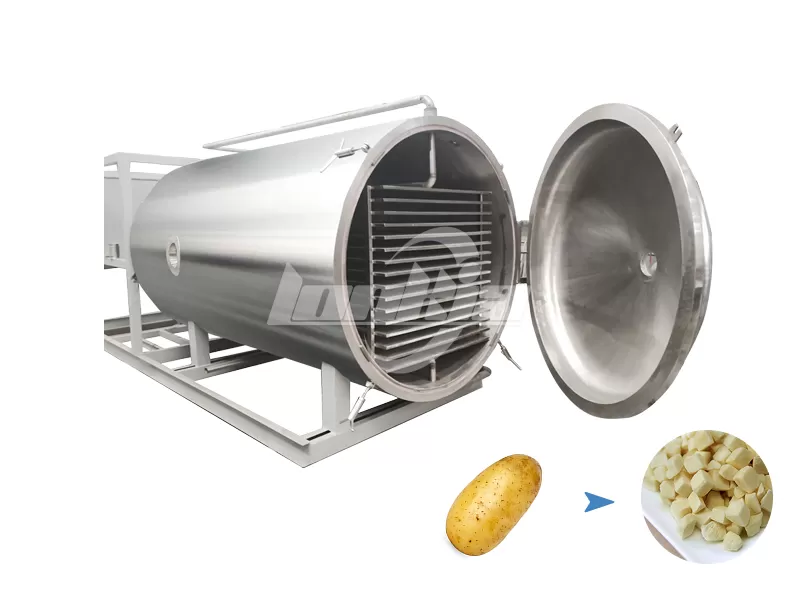
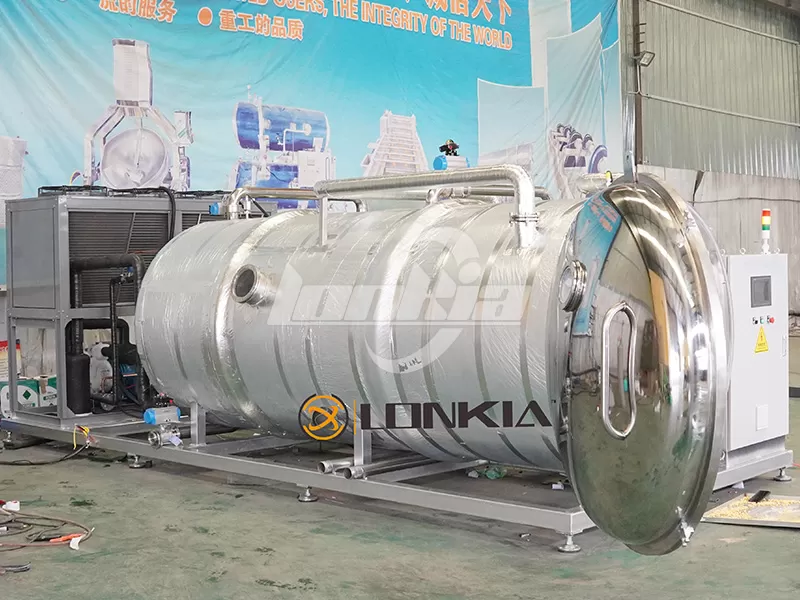
Freeze dried food equipment is a type of processing equipment that utilizes low-temperature and vacuum technology to remove moisture from food through sublimation. The entire process bypasses the liquid water stage, thereby preventing damage to the food's structural integrity.
This means:
- The product's shape remains largely unchanged
- Nutrient loss is minimal
- Rehydration performance is excellent
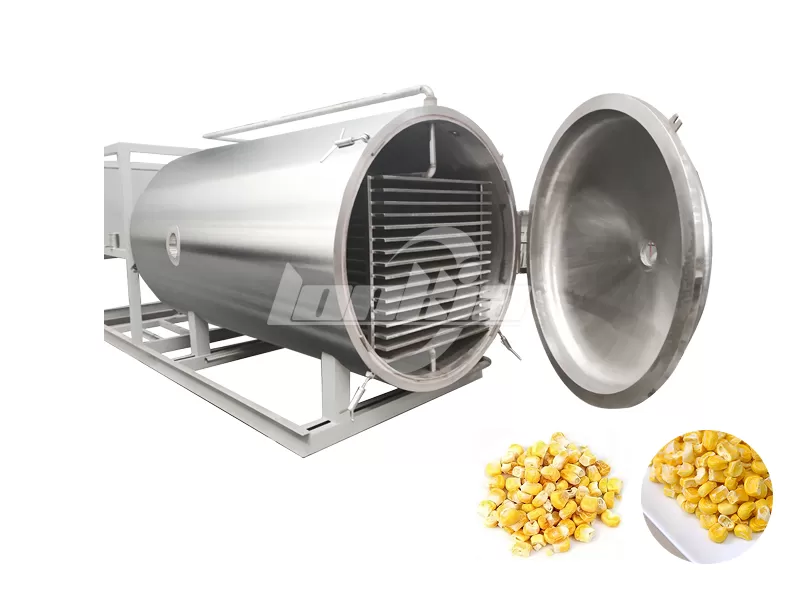
As a result, this food freeze dryer machine is widely used in the processing of fruits, vegetables, meats, and high-value-added foods.
Working Principle of Freeze Dry Equipment
Core Technology: Vacuum Freeze Drying
The core of freeze drying equipment lies in "low-temperature freezing + vacuum sublimation." The entire process revolves around the direct conversion of water from ice to water vapor.
Essentially:
👉 Freeze the material in a low-temperature environment
👉 Allow the ice to sublimate directly under vacuum
👉 Collecting the water vapor via a condensation system
This method avoids the quality loss associated with traditional heat drying.
Standard Operating Procedure for Freeze Drying Equipment
1. Pre-freezing Stage
After entering the equipment, the material is rapidly cooled to below -30°C, causing the internal moisture to fully crystallize.
👉 Key Point: Freezing speed directly affects product structural stability
2. Primary Drying Stage
Under high-vacuum conditions, ice crystals sublimate directly into water vapor, which is then condensed and captured.
👉 This stage removes approximately 90% of the moisture
👉 It is the most critical step in freeze drying machine
3. Secondary Drying Stage
Residual moisture is further removed through precise temperature control, bringing the product to the desired moisture content.
👉 Directly impacts product shelf life and quality stability
Core Structural Components of Freeze Dry Food Machine
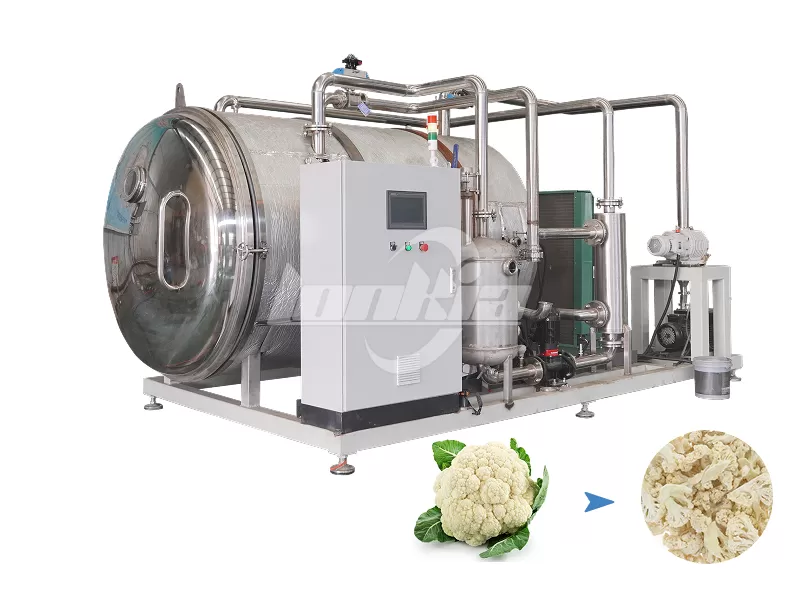
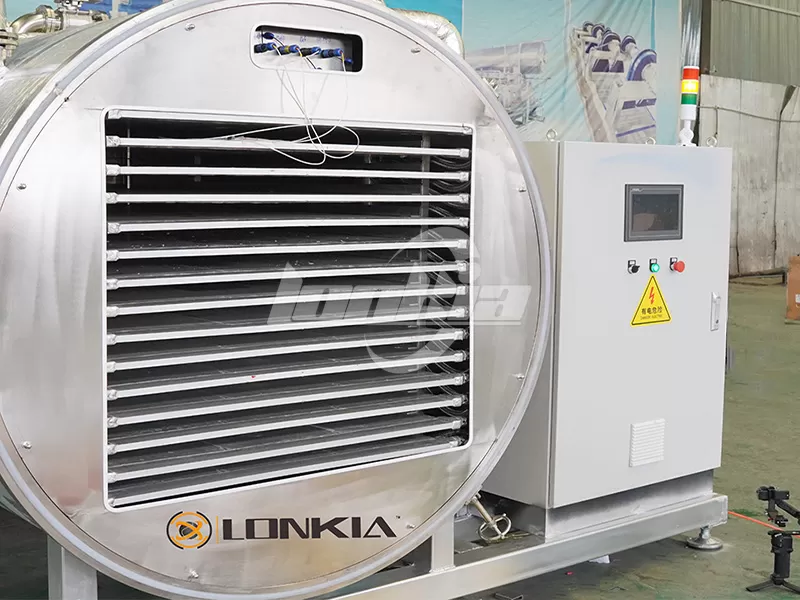
A complete set of freeze dried food equipment typically consists of the following systems:
- Refrigeration System: Provides a stable low-temperature environment
- Vacuum System: Ensures sublimation conditions
- Condensation System: Efficiently captures water vapor
- Heating System: Provides uniform heat
- Control System: Enables automated operation
These systems work in tandem to ensure the equipment operates stably and reliably during continuous production.
Key Advantages of Freeze-Dryer Machines
- Preserves Original Product Quality: The freeze-drying process does not damage cellular structures, so the product retains its color, shape, and flavor, closely resembling its fresh state.
- Extends Shelf Life: Low moisture content effectively inhibits microbial growth, making the product suitable for long-term storage and long-distance transportation.
- Enhances Product Value: Freeze-dried foods fall into the high-end product category, commanding higher market prices and offering greater profit margins.
Which Businesses Are Suitable for Freeze Dried Food Equipment?
If your business exhibits the following characteristics, we recommend prioritizing food freeze dryer machine:
- Need to elevate product grade and price
- Target export or long-term storage markets
- Process fruits, vegetables, or protein-based products
- Seek to improve product stability and consistency
Taking Lonkia's equipment solutions as an example, they can be flexibly configured based on different materials and production capacity requirements, helping businesses achieve stable production and quality upgrades.
How to Select the Right Freeze Dried Machine?
When purchasing freeze dried food dryer, we recommend focusing on the following aspects:
- Whether the processing capacity (kg/h) matches production needs
- The stability of the vacuum and refrigeration systems
- Energy consumption levels and operating costs
- Whether the control system is intelligent
- Whether customized design is supported
Appropriate equipment selection not only impacts production efficiency but also directly affects long-term operating costs.
Conclusion
Freeze dried food equipment utilizes low-temperature vacuum sublimation technology to achieve high-quality food drying. Compared to traditional methods, it offers significant advantages in product quality, storage capacity, and market value.
For food processing companies seeking to enhance product competitiveness, selecting the right freeze drying equipment represents not only an upgrade in equipment but also an upgrade in business models.