Candy that collapses, shrinks, cracks, or becomes misshapen after vacuum freeze drying is a major concern for candy manufacturers. This is particularly true for soft candies, jelly candies, marshmallows, and filled candies, which differ in formulation, moisture content, and internal structure. If the temperature, vacuum level, or duration during the freeze-drying process are not properly controlled, the final appearance and texture may be adversely affected.
Therefore, the key to "How to Prevent Candy Deformation During Freeze-Drying" lies not merely in controlling a single parameter, but in maintaining stability throughout the pre-freezing, vacuum sublimation, and heating processes, allowing the moisture inside the candy to sublimate gradually while preserving its original structure as much as possible.
Why Do Candies Deform During Freeze Drying?
1. Unstable Rate of Moisture Removal
Vacuum freeze drying technology employs a "freezing + vacuum sublimation" process. The moisture in the candy first freezes into ice crystals, which then directly sublimate into water vapor under vacuum conditions. If heat is applied too rapidly during the sublimation phase, the ice crystals inside the product may sublimate too quickly, causing the structure to undergo significant changes and resulting in collapse or deformation.
2. Different candies require different process parameters
Gummies, jelly candies, marshmallows, and composite candies differ in sugar content, gelatin content, and internal structure; therefore, a single freeze-drying program cannot be applied universally. The candy freeze dryer machine must adjust temperature, vacuum level, and processing time based on the product's characteristics.
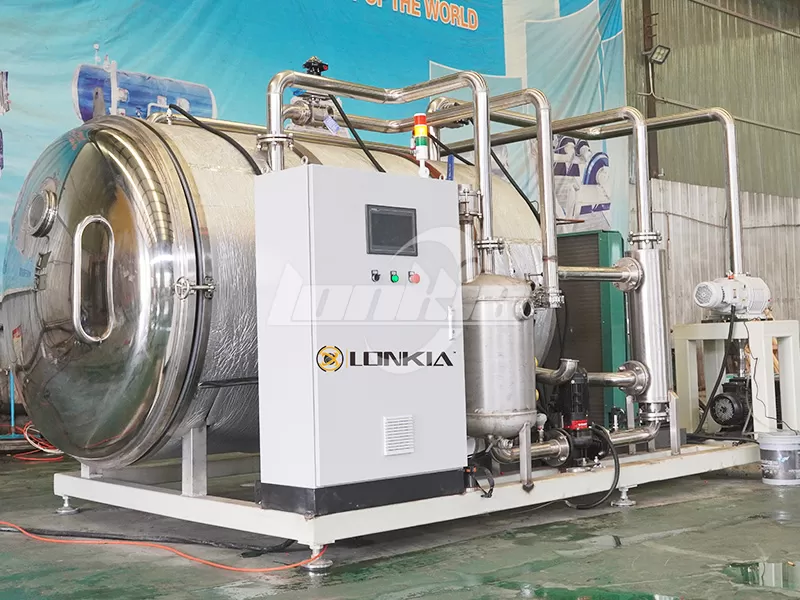
How Can a Candy Freeze Dryer Help Reduce Deformation in Candies?
1. Stable Control of the Pre-freezing Process
Pre-freezing is a critical step in forming a stable product structure. Candies must be thoroughly frozen before entering the vacuum sublimation stage, allowing the internal moisture to form a relatively stable ice crystal structure. A stable refrigeration system provides a solid foundation for the subsequent sublimation process.
The LONKIA candy freeze dryer machine features a cold trap with a minimum temperature of ≤-45°C, providing stable low-temperature conditions for the freeze-drying process.
2. Precisely Control Vacuum Level and Heating
Once the sublimation stage begins, the vacuum and heating systems must work in coordination. If the vacuum level is too low or heating is too rapid, it may cause uneven release of internal moisture from the candy.
The freeze dryer for candy achieves a maximum vacuum of ≤10 Pa and controls the freeze-drying process via a PLC and touchscreen, allowing operators to adjust process parameters based on the type of candy.
Loading Method Also Affects Final Shape
In addition to freeze dryer machine parameters, the way candies are arranged on the trays also affects the freeze-drying results. If candies are arranged too densely or vary significantly in thickness, drying rates may differ across the tray. Therefore, during production, it is important to maintain a reasonable loading thickness and even distribution to ensure relatively consistent heat and mass transfer conditions for the candies on the tray.
For candies with different formulations, it is recommended to conduct process testing first to determine the appropriate loading method and freeze-drying program.
Selecting the Right Freeze Drying Equipment for Candy
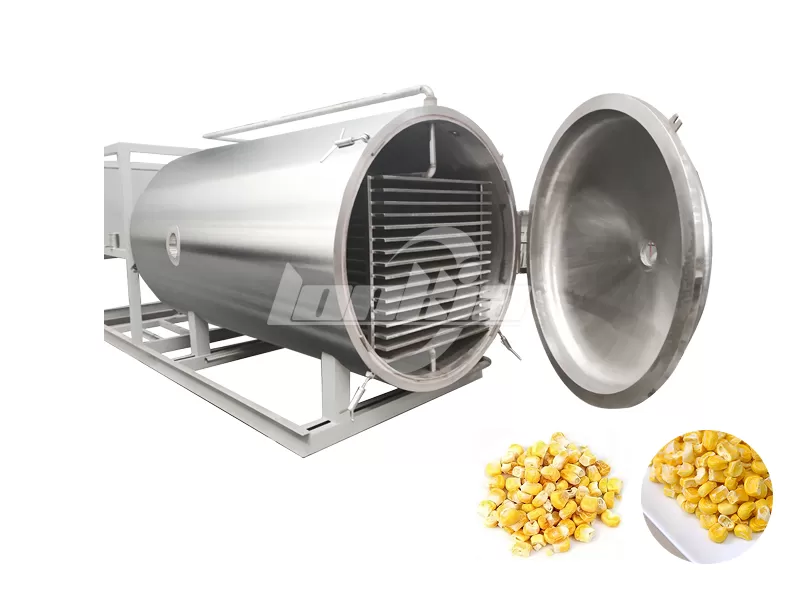
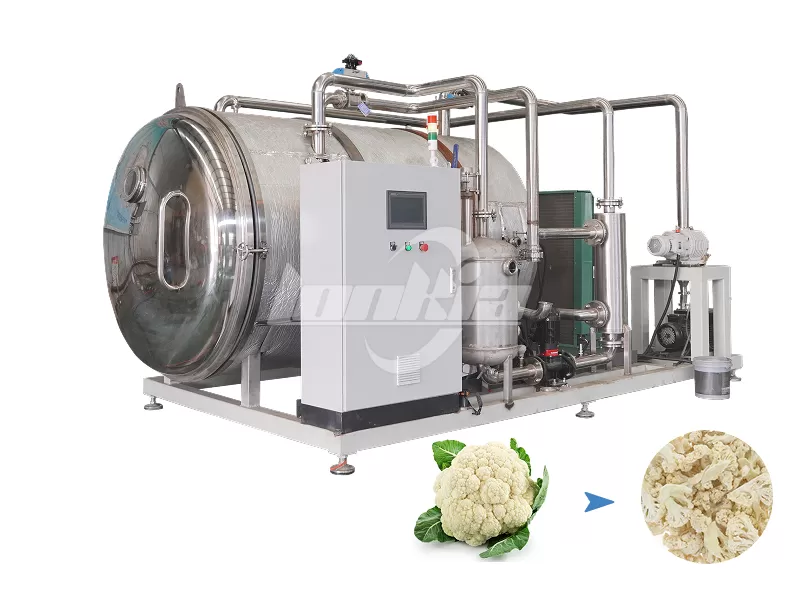
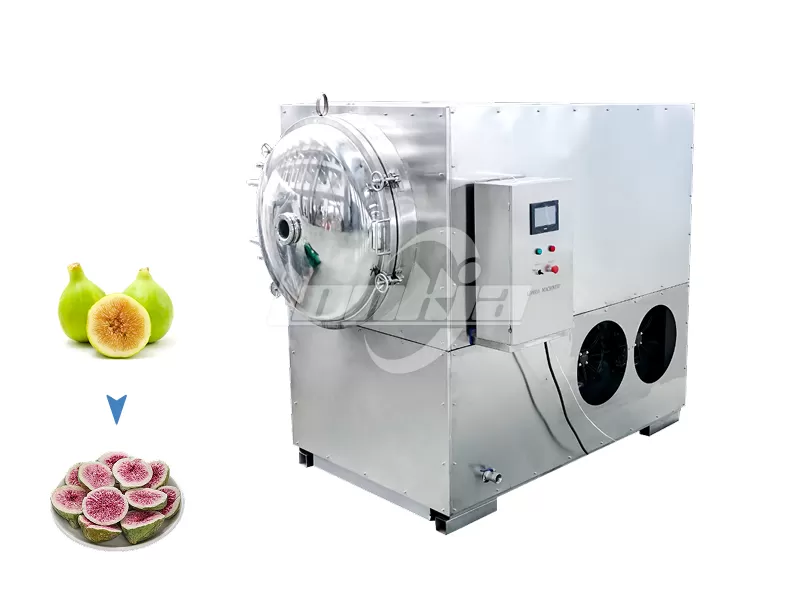
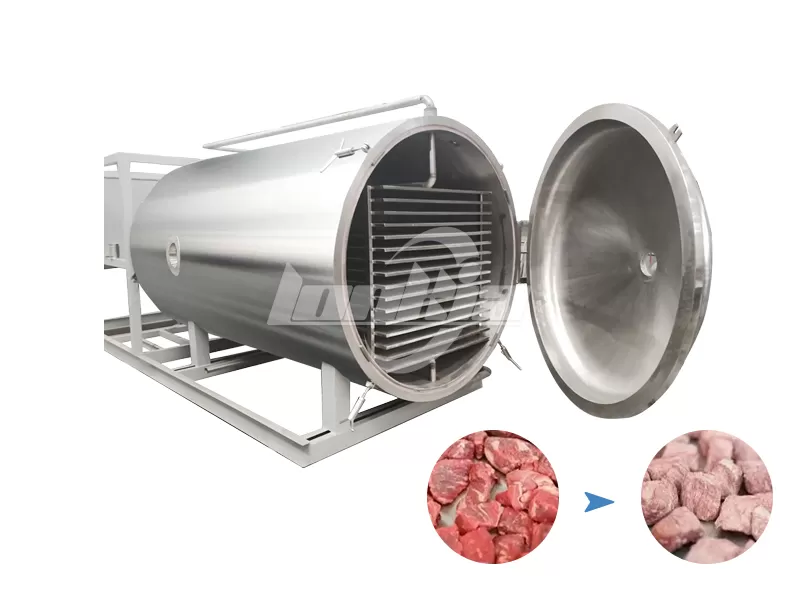
To minimize deformation of candy, the equipment must provide stable control over low temperature, vacuum, and heating, while also allowing for parameter adjustments tailored to different products. LONKIA candy freeze dryer machines offer an effective freeze-drying area of 1–120 m² and a single-batch processing capacity of 5–500 kg, and can be configured according to candy type and production requirements.
For candy manufacturers seeking to improve product consistency, it is more important to focus on cold trap temperature, vacuum performance, control systems, and the ability to adjust process parameters—rather than simply on equipment throughput. Proper equipment configuration and preliminary process testing can help reduce quality issues such as deformation and collapse, resulting in freeze-dried candies with a more consistent appearance and crisp texture.
If you are selecting vacuum freeze drying equipment for candy, you can contact LONKIA to obtain tailored equipment configurations and process recommendations based on the type of candy, batch capacity, and desired product characteristics.