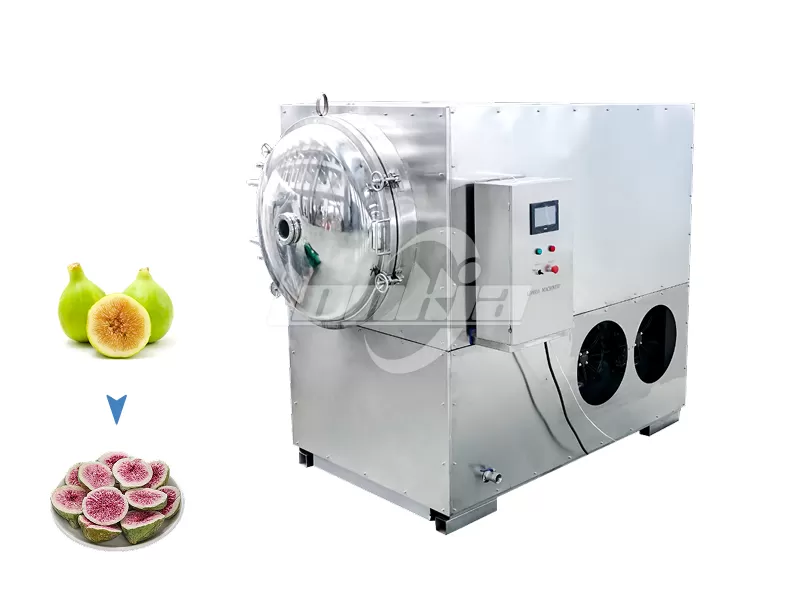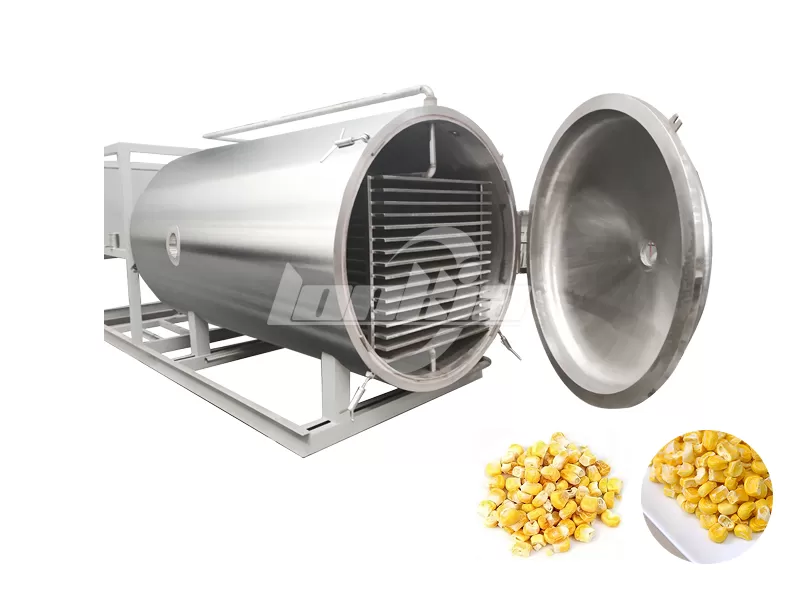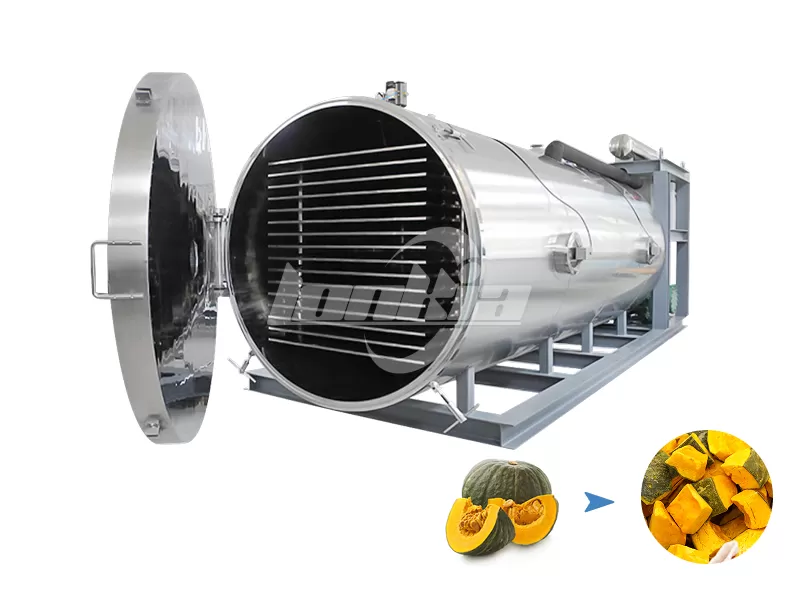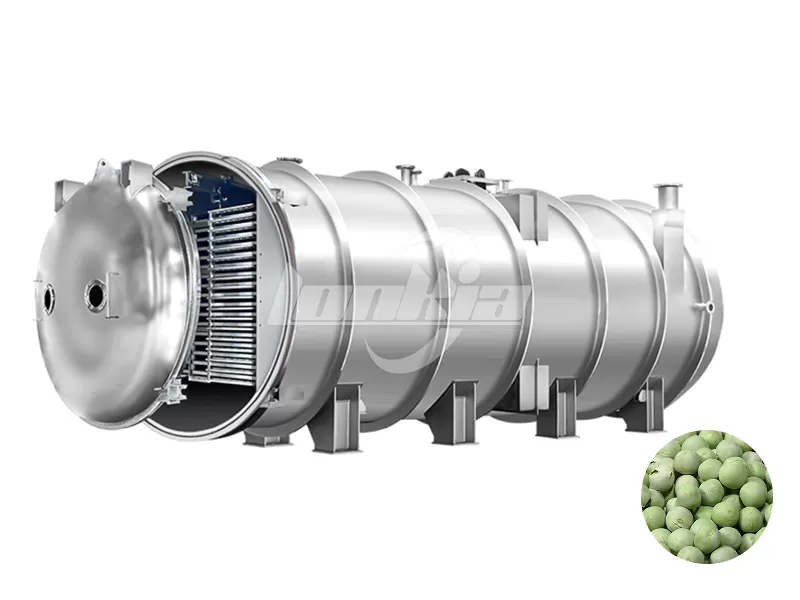
When fruit processing companies select industrial freeze dryers, the most important consideration is not simply comparing equipment prices, but determining whether the machine truly matches their raw materials, production capacity, and manufacturing requirements. Different fruits vary in moisture content, shape, tissue structure, and loading methods; therefore, a comprehensive evaluation is needed, taking into account processing capacity, drying area, freeze-drying cycle, vacuum system, and refrigeration system. For the processing of fruits such as blueberries, strawberries, mangoes, and apples, selecting the right equipment can help companies establish a more stable freeze dryer process.
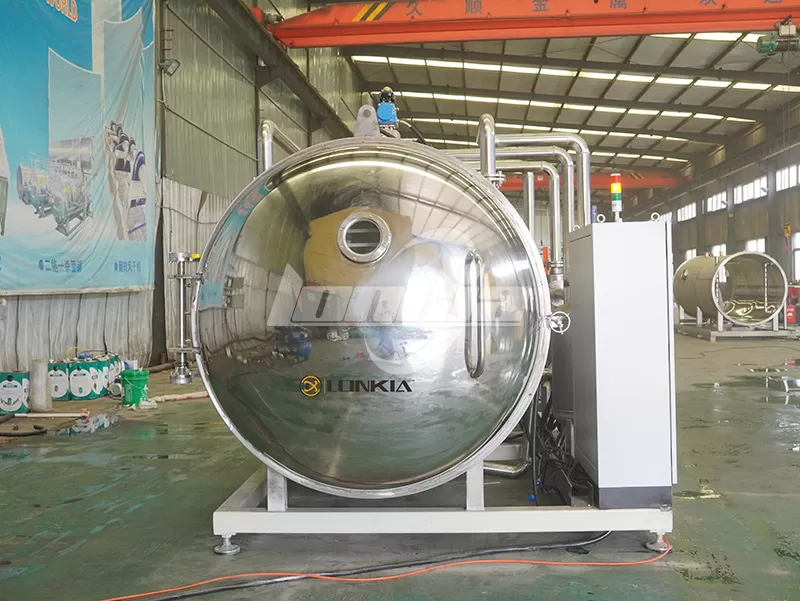
Start with Your Fruit and Required Capacity
The first step in selecting an industrial freeze dryer is to determine how much fresh fruit needs to be processed daily and how much raw material you wish to process per batch.
For example, both blueberries and strawberries are suitable for vacuum freeze-drying, but equipment selection in actual production cannot be based solely on the fruit's name. Customers need to provide the fruit variety, daily raw material supply, target daily output, and product form to determine the appropriate equipment capacity.
For seasonal fruit processing companies, the maximum processing capacity during peak season should also be considered. If the equipment's batch capacity is insufficient, it will increase the number of production batches and waiting times; conversely, if the equipment configuration does not match the actual raw material supply, it will also affect the return on investment.
Calculate the Required Drying Area
The drying area of an industrial freeze dryer directly affects the material loading method and batch processing capacity. When selecting equipment, calculations should take into account the number of trays, single-layer loading thickness, material form, and target batch capacity.
For whole blueberries, sliced strawberries, or other fruit products, an appropriate layer thickness helps maintain stable heat transfer and moisture sublimation conditions. Therefore, it is necessary to verify the drying area corresponding to this data and the actual loading method.
A professional equipment proposal should clearly inform the customer of the equipment's effective drying area, the number of trays included, the recommended raw material load per batch, and whether loading methods need to be adjusted for different fruits.
Pay Attention to the Vacuum and Condenser System
The core function of an industrial freeze dryer is the stable removal of moisture through the processes of freezing, vacuum, and sublimation. Therefore, the vacuum system, refrigeration system, and condenser system are critical components that must be thoroughly inspected during the procurement process.
Customers should confirm with the manufacturer the vacuum pump configuration, ultimate vacuum level, condensation temperature, condensation capacity, and refrigeration system parameters. A stable vacuum environment helps maintain the sublimation process, while sufficient condensation capacity is necessary to capture the water vapor generated during freeze-drying promptly.
These parameters directly affect the equipment's actual operational performance and are more important than simply comparing appearance, tray capacity, or total power.
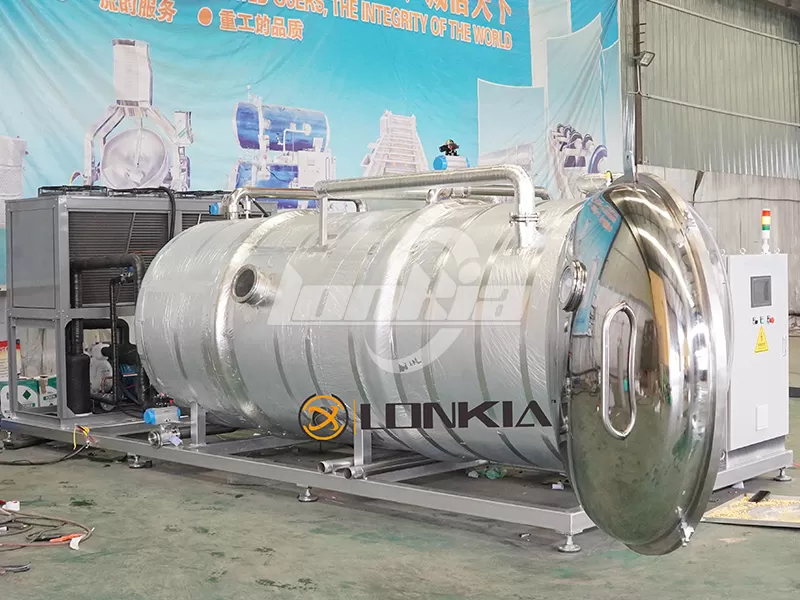
Ensure the Machine Fits Your Facility
After selecting a freeze drying machine model, you must also verify the actual installation conditions. Before purchasing, confirm the equipment's dimensions, weight, voltage, frequency, number of phases, and installed power, and ensure sufficient space is reserved for material handling, operation, and maintenance.
If the equipment is to be installed in an existing food processing facility, you should also verify in advance the transportation routes, door widths, and installation location. Verifying this information ahead of time can prevent issues such as insufficient installation space once the equipment arrives at the facility.
Can a Single Machine Process Different Fruits?
If a company processes blueberries, strawberries, apples, or other fruits simultaneously, a single industrial freeze dryer can typically be adjusted to accommodate different materials; however, this does not mean that all fruits will use exactly the same parameters.
Freezing and drying programs for different fruits must be adjusted based on product size, moisture content, loading method, and final product requirements. Therefore, when purchasing, you should specifically ask the manufacturer whether they can provide freeze-drying parameters and test protocols for different fruits.
Conclusion
The right industrial freeze dryer should be matched to the type of fruit, raw material supply volume, and target production capacity. When purchasing, verify each item in sequence—batch capacity → drying area → freeze-drying cycle → vacuum system → condensation system → power requirements → installation space—rather than simply comparing equipment prices.
For companies planning to process fruits such as blueberries and strawberries, it is recommended to conduct raw material testing before finalizing the model and to confirm the loading capacity and freeze-drying program based on the test results. This approach ensures the selection of industrial freeze-drying equipment that truly meets specific production needs and lays the foundation for stable production in the future.