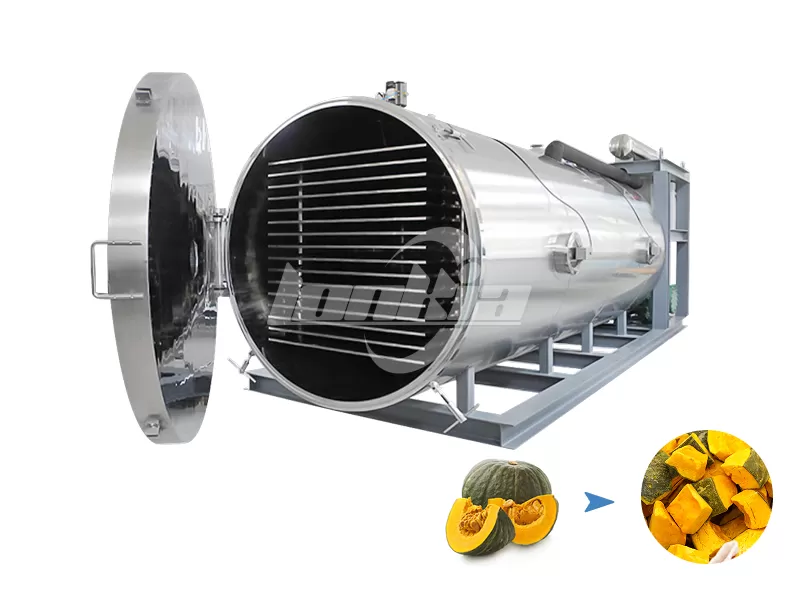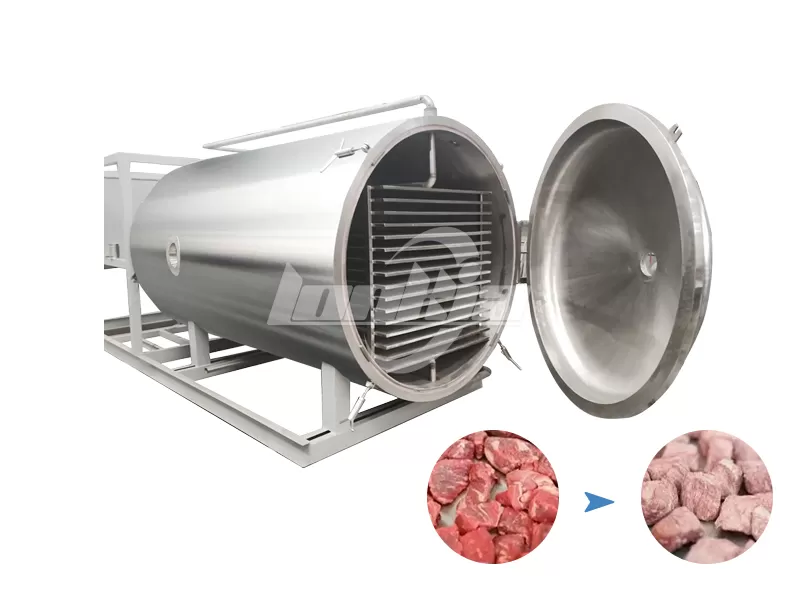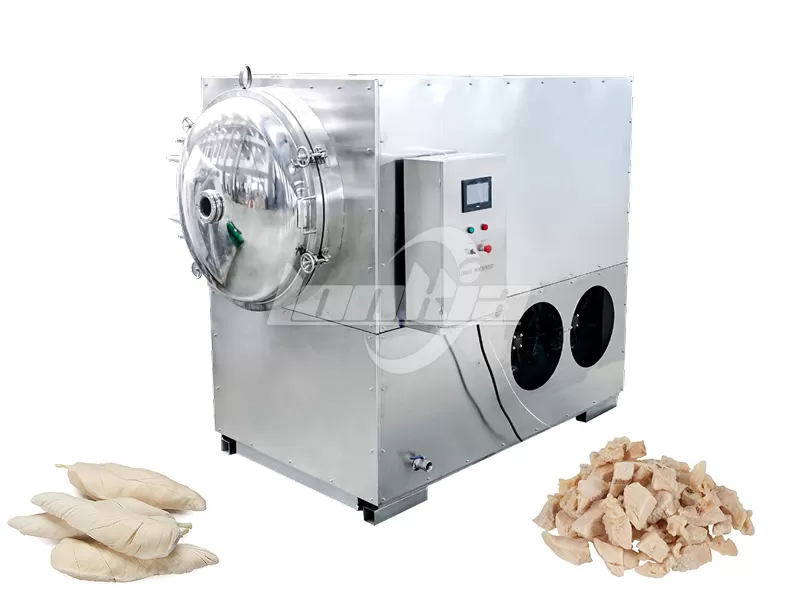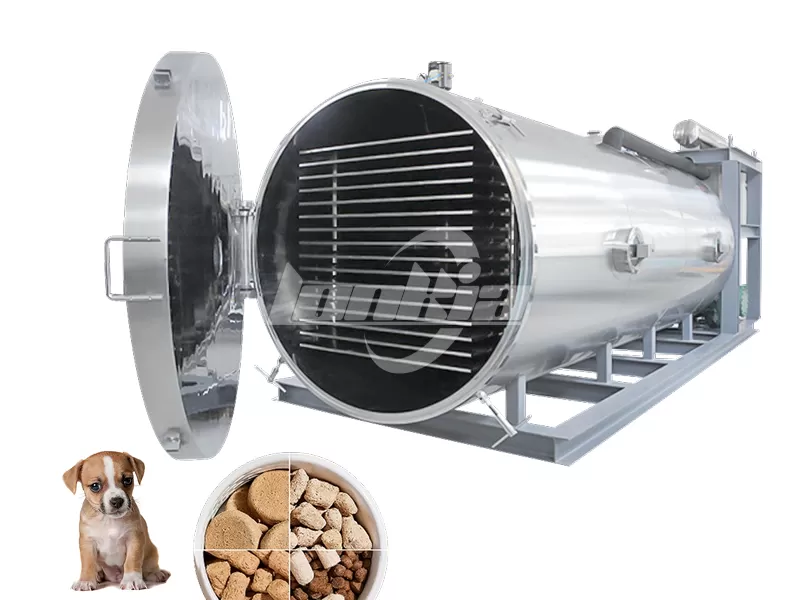
When selecting a food freeze dryer machine, the most common mistake many customers make is focusing solely on the rated capacity. In reality, production capacity not only affects the price of the equipment but also directly impacts production efficiency, cost control, and product quality. If the wrong model is chosen, the consequences can range from low efficiency to disruptions in the entire production line.
This article will help you systematically determine the actual production capacity of the freeze dried food equipment you need.
What Is Freeze Dryer Capacity? Bigger Isn't Always Better
Food freeze dryer machine capacity typically refers to the weight of material that can be processed per batch (kg/batch). However, it's important to note:
- Capacity ≠ Simply How Much Material Can Be Loaded
- The key lies in whether the material can be completely dried
Many food freeze dryer machines list theoretical loading capacities, but actual effective capacity depends on moisture removal capability and system compatibility.
👉 In other words:
Being able to fit it in ≠ Being able to dry it properly
Core Factors Affecting Food Freeze Dryer Capacity
1. Condenser Capacity
The condenser determines the ability to capture water vapor, which essentially determines how much moisture can be processed.
- The freeze drying process is essentially the sublimation of water.
- The more moisture there is, the higher the condensation capacity required.
👉 If condensation capacity is insufficient:
- Drying time is extended
- Product moisture content is uneven
- Operations may even be interrupted
(This is the most important parameter that customers tend to overlook)
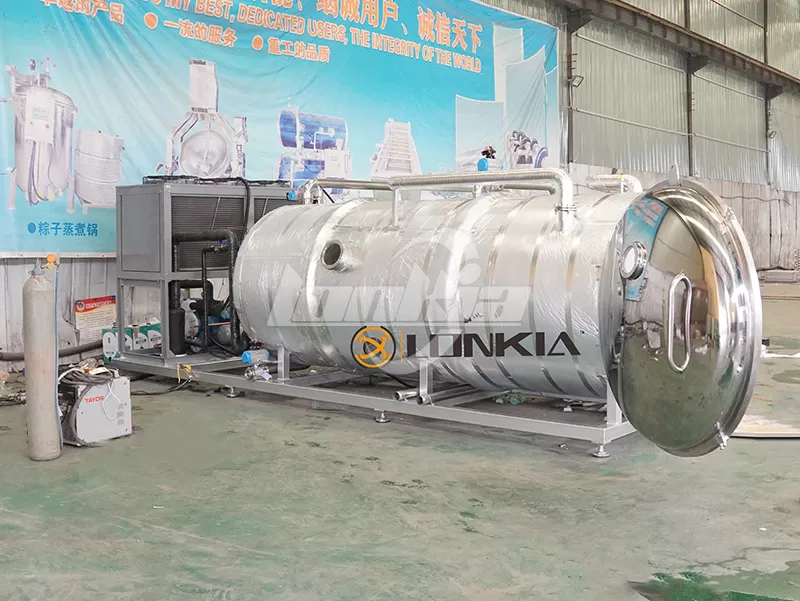
2. Tray Area and Number of Layers
Trays determine the surface area of the material:
- Larger area → Easier sublimation of moisture
- More layers → Increased batch capacity
But note:
More layers aren't always better; uniform heating and stable vacuum must be ensured
3. Material Type and Moisture Content
Different foods have a significant impact on production capacity:
- Fruits (high moisture content): Require more condensation capacity
- Meat (high density): Affects drying speed
For example, high-moisture materials may only achieve about 70% of the rated capacity.
4. Material Thickness
Material thickness directly affects drying efficiency:
- Recommended thickness: ≤1.5 cm
- Excessive thickness leads to:
- Underdrying
- Significantly extended processing time
👉 This is also the real reason many customers perceive the machine as inefficient
5. Matching the Vacuum and Refrigeration Systems
A high-quality food freeze dryer must ensure:
- Rapid cooling
- Stable vacuum
- Continuous sublimation
Otherwise, even with a large machine size, the full production capacity cannot be realized.
How to Calculate the Required Freeze Dryer Capacity?
You can use a simple logic to determine this:
Step 1: Determine daily output
For example:
- You need to process 100 kg of fresh fruit daily
Step 2: Determine the processing time per batch
Typical freeze-drying cycle:
- 20–30 hours/batch (standard food products)
Step 3: Calculate equipment requirements
Assumption:
- Single-unit capacity: 50 kg/batch
- Operate 1 batch per day
👉 Therefore, you will need:
2 units or a machine with higher capacity
Practical advice:
- Do not base calculations on maximum capacity
- Allow for a 20%–30% margin
This prevents the food freeze dryer machine from operating at overload for extended periods
Optimization Design Advantages of the Lonkia Food Freeze Dryer Machine
In practical applications, Lonkia has implemented targeted optimizations to address capacity issues:
- Enhanced condensation system design to increase moisture handling capacity
- Multi-layer tray structure with uniform heating to improve drying consistency
- Stable vacuum system operation to shorten drying cycles
👉 These designs help customers achieve more stable production output that is closer to theoretical values within the same freeze dried machine footprint.
Conclusion: Choosing the Right Capacity Is More Important
For food freeze dryers:
- Capacity determines production efficiency
- Configuration determines actual performance
The truly reasonable approach is:
- Match your production volume requirements
- Consider material characteristics
- Focus on core systems (condensation + vacuum)
Rather than simply pursuing larger food freeze dryer machine.